
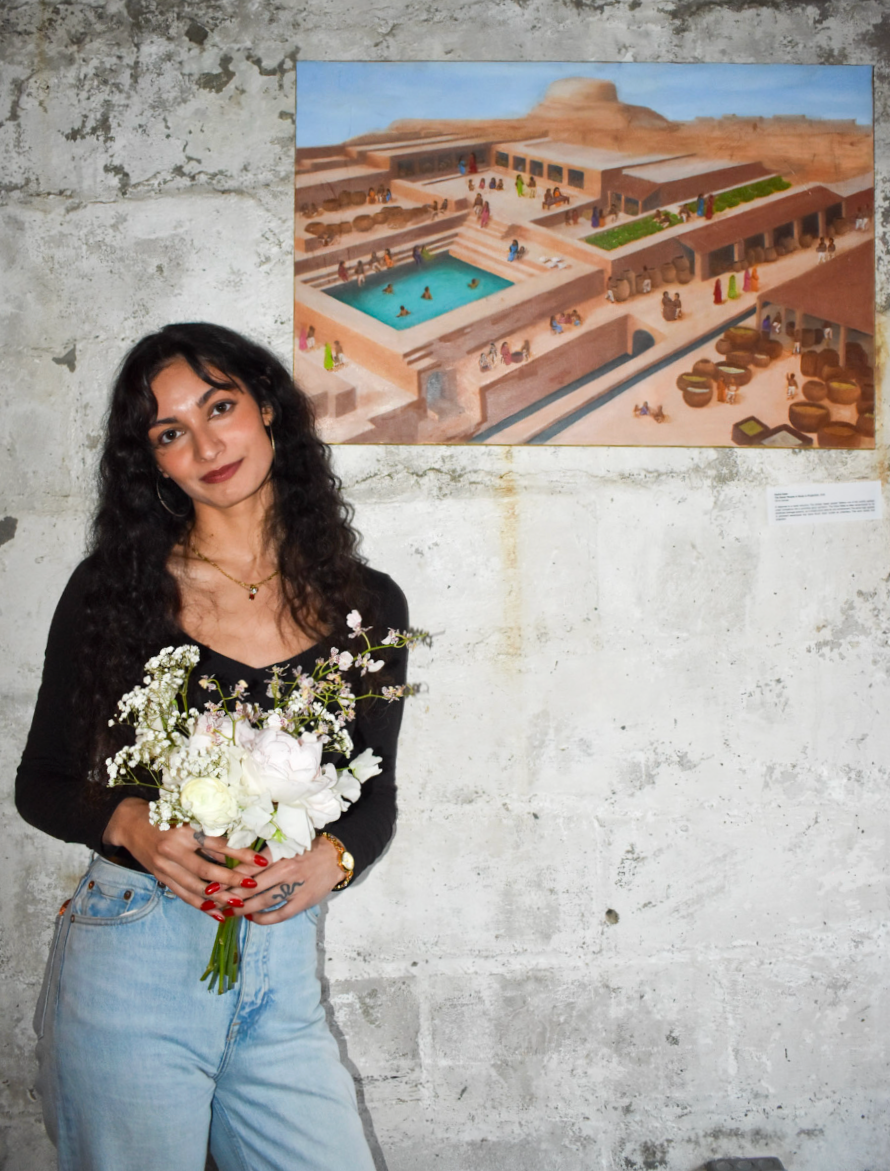
the artist
Photographed by @sravyabas
Kesha Dalal is a Brooklyn, New York based oil painter whose work explores how cultural exposure in childhood can shape one’s material memory in adulthood. Though she was born and raised in Cleveland, Ohio, Dalal grew up greatly influenced by the visual language of her South Asian heritage. From early childhood to early adulthood, Dalal participated in her family’s Indian wedding decoration business where she was surrounded by saturated colors, vibrant embellishment, and ritual display. That early exposure to maximalist creativity continues to inform her sensitivity to texture, patterns, and symbolic objects. With a professional background in fashion, Dalal brings an editorial awareness to composition, studying how the presence of fabric and architecture affect the vibrant colors and cultural visuals that surround them.
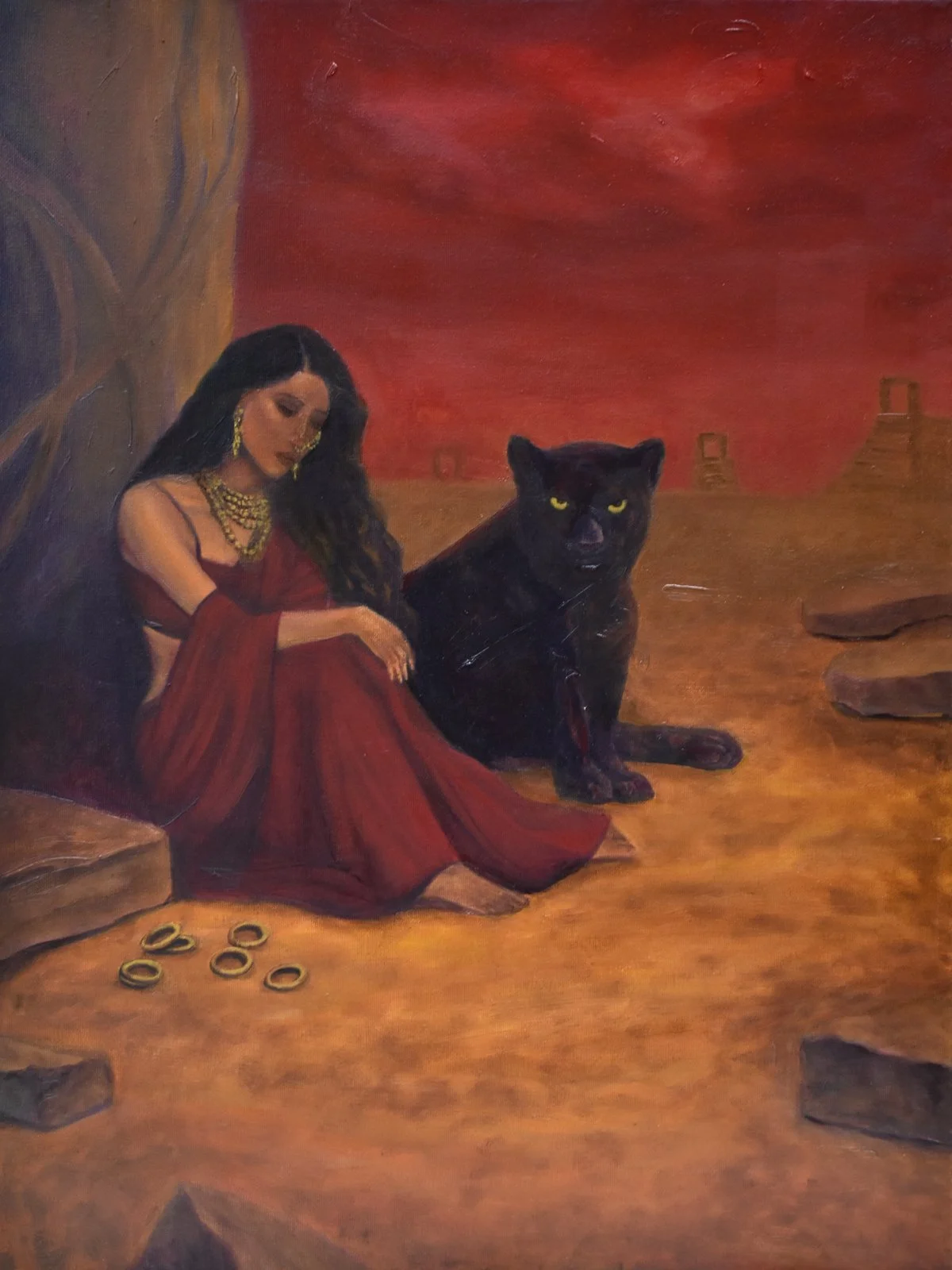
My paintings explore generational and cultural trauma through the tension between beauty and stillness. Saturated color, sparkling jewelry, and carefully composed objects create moments of visual abundance that hold more complicated emotional histories beneath the surface.
I am drawn to imagery that carries distinct South Asian histories and personal associations such as tropical fruits, sari fabric, and the color red. Through painting, I revisit these familiar symbols on my own terms, exploring how cultural memory, identity, and inherited experience exist within daily life. My work considers how beauty can hold both intimacy and contradiction, creating space for histories that are at both, deeply personal yet shared by many.