
 Image 1 of 1
Archival Fine Art Print
Printed on heavyweight, museum-quality cold press paper with a soft matte texture that closely resembles the surface of the original oil painting.
Each print is produced using archival pigment inks for rich color, depth, and longevity.
Signed by the artist.
Art Description
The phrase “sewer people” flattens one of the world’s earliest urban civilizations into a punchline about sanitation. The Indus Valley is often remembered for its advanced drainage systems — as if infrastructure were its only achievement. The same logic applies to persistent stereotypes that frame South Asian bodies as unsanitary.
This work resists that projection.
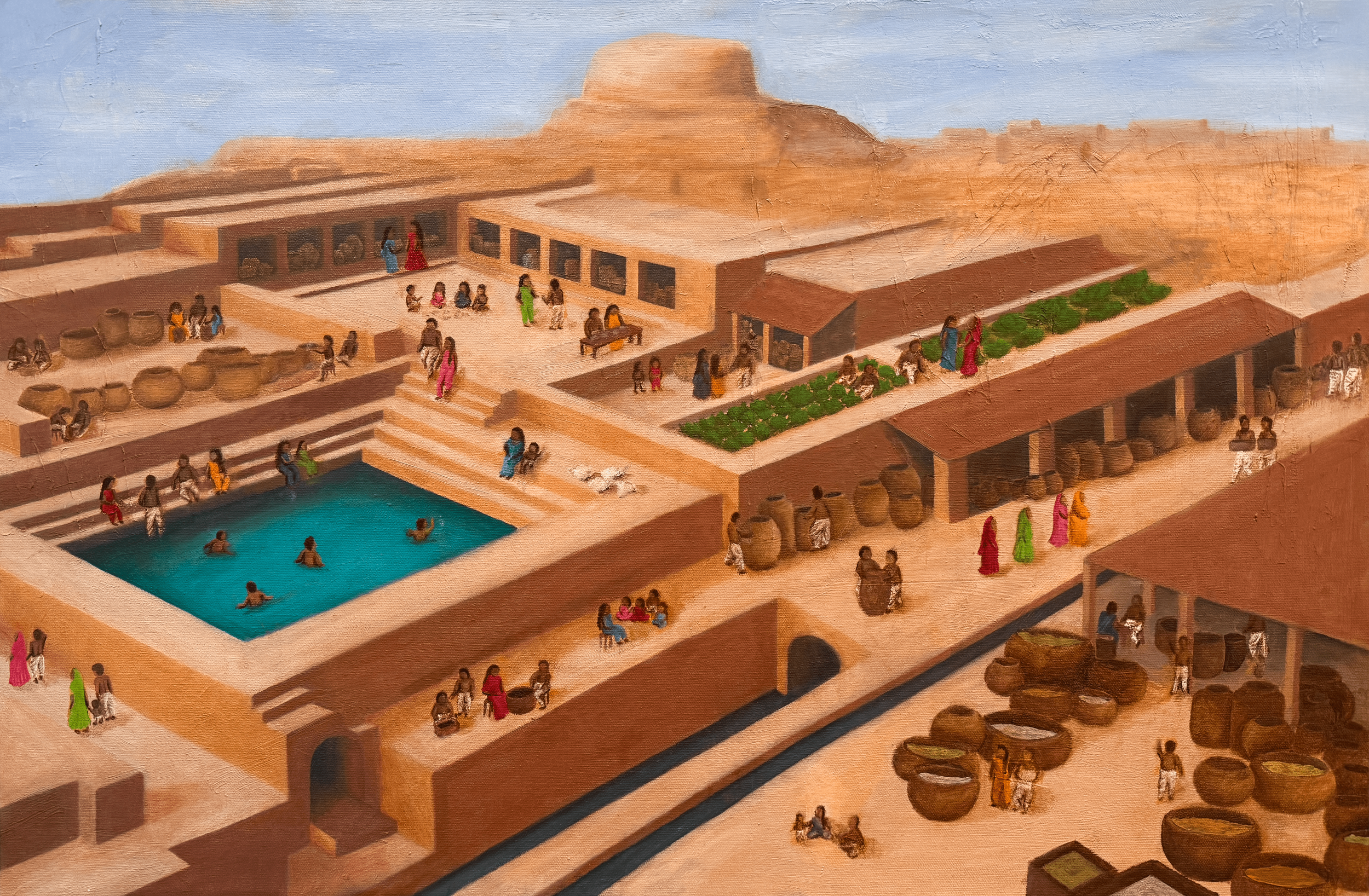
Children and pregnant women appear throughout the composition signaling the continuity of life, culture, and inheritance. Each figure exists in relation to others; bathing, gathering, working, speaking, with community as an organizing principle. Drainage systems do appear in the painting but rather than dominating the composition, they exist within a vibrant social world.
While inspired by archaeological research, clothing, gestures, and social rhythms within this painting attempt to collapse time. Rather than portraying an ancient civilization as distant or fossilized, it asserts continuity. Our history is not fossilized — it is embodied, timelessly.
Archival Fine Art Print
Printed on heavyweight, museum-quality cold press paper with a soft matte texture that closely resembles the surface of the original oil painting.
Each print is produced using archival pigment inks for rich color, depth, and longevity.
Signed by the artist.
Art Description
The phrase “sewer people” flattens one of the world’s earliest urban civilizations into a punchline about sanitation. The Indus Valley is often remembered for its advanced drainage systems — as if infrastructure were its only achievement. The same logic applies to persistent stereotypes that frame South Asian bodies as unsanitary.
This work resists that projection.
Children and pregnant women appear throughout the composition signaling the continuity of life, culture, and inheritance. Each figure exists in relation to others; bathing, gathering, working, speaking, with community as an organizing principle. Drainage systems do appear in the painting but rather than dominating the composition, they exist within a vibrant social world.
While inspired by archaeological research, clothing, gestures, and social rhythms within this painting attempt to collapse time. Rather than portraying an ancient civilization as distant or fossilized, it asserts continuity. Our history is not fossilized — it is embodied, timelessly.